Struggling to stop intrusive thoughts during meditation? You’re not alone. In this blog post, we explore nine practical strategies to deepen your meditation and find tranquility. Let’s look at ‘How to Quiet Your Mind During Meditation’…from guided meditations and breathwork to using crystals and technology, these tips make your meditation more effective and enjoyable….
1. Guided Meditations
Using a guided meditation is super helpful. It provides a structure and a voice to follow, which prevents your mind from wandering. I personally find this helps me stay more focused.
There are many high-quality guided meditation videos available online, such as the 20 Minute Guided Meditation for Anxiety by The Mindful Movement. These resources offer expert guidance and are great for those new to meditation or struggling to maintain focus. (source)
2. Focus on the Breath
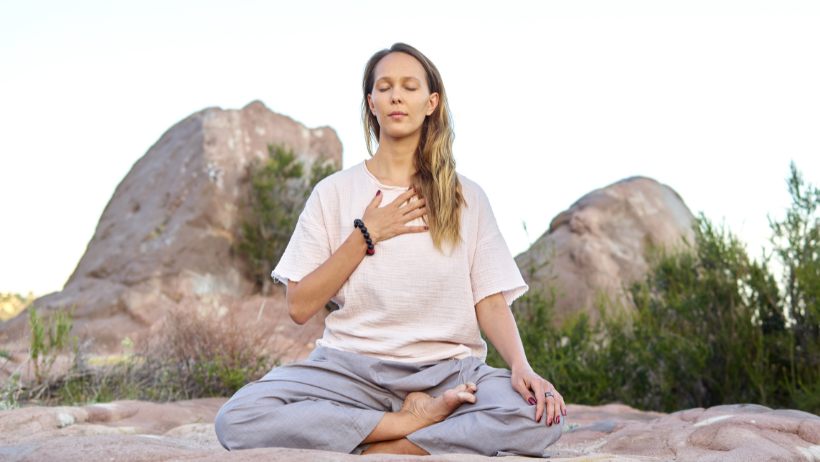
Concentrating on your breath anchors your mind. Try counting your breaths or focusing on the sensation of air entering and leaving your nostrils or mouth (depending which is more comfortable).
When your mind inevitably wanders, gently bring your attention back to your breath without judgment—this practice of returning to the present moment is the core of meditation and helps train your mind to be more focused and calm.

3. Chant a Mantra
Instead of forcing your mind to be quiet, chant a mantra. It might sound a bit mystical, but it’s actually pretty simple. Think of a mantra like a mental anchor—a word or phrase you repeat that helps stop your thoughts from bouncing all over the place.
You can choose something traditional like “Om” or go personal with something like “I am calm” or even just a word that makes you feel peaceful.
The cool thing is that repeating this phrase gives your busy brain something specific to focus on, kind of like giving a hyperactive puppy a chew toy. It helps interrupt that constant stream of thoughts and slips into a more relaxed state of mind.
Here are some examples of ancient mantras you can use today…
- “Om Mani Padme Hum”: This is a powerful and widely used Buddhist mantra. It invokes the blessings of compassion and wisdom. This mantra helps you focus and bring a sense of peace and clarity to your meditation.
- “So Hum”: This Sanskrit mantra translates to “I am that.” It’s often used to connect with the universal self and promote a sense of unity and oneness. Repeating “So” on the inhale and “Hum” on the exhale can help synchronize your breath and mind, making it easier to stay present.
How to Manifest exactly what you want with Crystals
10 Healing Crystal Affirmations for Beginners
4. Short Sessions
Start with shorter meditation sessions, like 5-10 minutes, and gradually increase the duration as you become more comfortable.
This is also helpful if you find it difficult to lie or sit for long sessions.
5. Body Scans
Feel yourself physically and mentally let go of tightness and stress with a body scan meditation. By slowly focusing on different parts of your body, you shift your attention away from racing thoughts and into the present moment.
Start at your toes and work your way up, noticing how each area feels. Take a moment to consciously release tension – imagine stress melting away as you breathe into each part of your body.
It’s a powerful way to reconnect with yourself and find a sense of calm, turning your attention from mental chatter to physical sensations.

6. Change Your Environment
Feeling stuck in your meditation routine? Sometimes a simple change of scenery can work wonders. Try switching up where or when you meditate – maybe that’s finding a sunny spot in your backyard, sitting by a window, or practicing in a different room where you feel more peaceful.
If you usually meditate in the evening when you’re tired, experiment with a morning session when your mind feels fresher.
The key is to find an environment that helps you feel calm and makes meditation feel less like a chore and more like a moment of personal refuge.
7. Use Technology
Meditation apps like Headspace and Calm can be total game-changers if you’re trying to build a consistent practice.
Think of them as your personal meditation buddy – they’ll guide you through sessions, send gentle reminders, and help you track your progress.
Plus, they’ve got a ton of different meditations for everything from stress to sleep, so you can find something that feels just right for you. It’s like having a meditation coach in your pocket, minus the awkward small talk.

8. Incorporate Crystals
Using crystals during meditation enhances your practice by providing a focal point, a reminder, and they also give you a sense of calm.
Crystals like amethyst, rose quartz, and clear quartz are popular choices for meditation. Hold a crystal in your hand, place it on your body, or arrange them around your meditation space.
The energy of the crystals help you stay grounded and focused, making it easier to quiet your mind.

9. Use Sound Bowls
Incorporate sound bowls, or singing bowls, to your meditation to create a deeply relaxing experience. The soothing tones and vibrations calm the mind and reduce stress.
Gently strike or circling the rim of the bowl to produce sound, allowing the vibrations to resonate through your body and mind, enhancing your meditation and well-being.
How to Quiet Your Mind During Meditation
Remember, it’s normal for the mind to wander during meditation. The key for how to quiet your mind during meditation is to gently guide it back without frustration. The goal is to achieve a mindful and peaceful state of being. Have you tried any of these techniques before?